Spec Battle: Weber Smoque Pellet Smoker vs Uplift Pursuit — Is It Worth Upgrading?
In the rapidly evolving landscape of smart outdoor appliances, 2026 has witnessed a collision between traditional culinary heritage and high-frequency electronic engineering. For years, the outdoor cooking market was dominated by heavy steel barrels and manual vents. Today, the conversation has shifted toward PID algorithms, cloud-connected telemetry, and precision heating elements. Two of the most talked-about contenders this season are the Weber Smoque Pellet Smoker and the Uplift Pursuit. While both fall under the umbrella of "outdoor electronics," they represent fundamentally different philosophies in how technology should interface with fire and food.
The Weber Smoque is the latest evolution from a brand that has spent decades perfecting the physics of airflow, now augmented with a robust digital backend. On the other side of the ring is the Uplift Pursuit, a product born from a tech-first startup culture that prioritizes rapid startup times, induction-hybrid systems, and an interface that feels more like a smartphone than a traditional grill. For the tech-savvy homeowner or the data-driven chef, choosing between these two involves more than just looking at the square inches of cooking space; it requires a deep dive into the silicon and software powering the smoke.
The Evolution of the Smart Smoker
Before dissecting the specific specs of the Smoque and the Pursuit, it is essential to understand the electronic shift in this category. Traditional pellet grills relied on simple "on/off" logic for the auger (the screw that feeds wood pellets into the fire). Modern units, like the ones discussed here, utilize Proportional-Integral-Derivative (PID) controllers. These controllers use complex calculus to predict temperature swings before they happen, adjusting fan speeds and fuel delivery in real-time. This level of automation is why these devices are increasingly classified alongside home theater systems and smart kitchen appliances in premium electronics retailers.

Weber Smoque: The Legacy of Precision
Weber’s entry into the high-end digital pellet market with the "Smoque" line marks a significant departure from their previous iterations. The Smoque is built around the "Weber Connect" ecosystem, which has been revamped for 2026 with a dedicated dual-processor hub. One processor handles the mission-critical tasks of fire management and safety protocols, while the secondary processor manages the high-resolution capacitive touch display and Wi-Fi 6E connectivity.
The build quality of the Smoque remains rooted in heavy-duty porcelain-enameled steel, but the electronics are where it earns its premium price tag. The unit features internal LiDAR-based fuel level sensing, which provides a three-dimensional map of the pellet hopper to the user's smartphone, ensuring that "flame out" errors due to bridging pellets are a thing of the past. In real-world use cases, such as an overnight brisket cook, this level of sensor redundancy is what separates a successful meal from a digital failure.
Key Features of the Weber Smoque
- Adaptive Smoke Engine: A variable-speed DC fan that modulates based on humidity and ambient temperature sensors.
- Dual-Band Wi-Fi 6E: Ensures a stable connection even in large backyards where standard 2.4GHz signals might struggle.
- Glow-Plug Ignition 2.0: A ceramic heating element designed to reach 1,800 degrees Fahrenheit in under 60 seconds for near-instant ignition.
- Integrated Lighting: High-temperature LED arrays that illuminate the entire cooking surface without color distortion, helpful for checking the "bark" on meat at night.
Uplift Pursuit: The Silicon Valley Challenger
The Uplift Pursuit takes a radically different approach. If the Weber is a powerhouse of traditional thermodynamics with a digital brain, the Pursuit is a piece of electronics that happens to cook food. It utilizes a hybrid heating system that combines traditional wood pellet combustion with an auxiliary induction coil at the base of the fire pot. This allows the Pursuit to reach searing temperatures of 700 degrees Fahrenheit, a feat most pellet smokers struggle to achieve.
The user interface of the Pursuit is centered around a 10-inch vertical OLED screen that is weather-rated to IP67 standards. It supports "Recipe Sync," where the smoker automatically adjusts its temperature profile based on the internal resistance and thermal weight of the protein as measured by its proprietary "Smart Probes." These probes do not just measure temperature; they measure moisture loss via electrical conductivity, providing a data point previously reserved for food science laboratories.
Looking for the best Electronics deals on Amazon?
Shop Amazon →Key Features of the Uplift Pursuit
- Hybrid Induction Ignition: Uses magnetic induction to accelerate the combustion of the wood, reducing startup smoke (often bitter) by 80%.
- Neural Network Cooking: An AI-driven backend that learns the thermal characteristics of your specific patio environment over time.
- Modular Accessory Port: A high-voltage DC port on the side of the unit that can power rotisseries, external pizza ovens, or even charge a laptop.
- Silent-Slew Fans: Magnetic levitation fans that operate at whisper-quiet decibels, even when the unit is in "Turbo Sear" mode.
Detailed Specification Comparison
When comparing these two units, the "battle" often comes down to the raw numbers and the efficiency of the internal components. The following table highlights the electronic and mechanical differences that buyers typically prioritize.
| Feature | Weber Smoque | Uplift Pursuit |
|---|---|---|
| Processor | Dual-Core ARM Cortex-M7 | Quad-Core NXP i.MX 8M Plus (AI Ops) |
| Connectivity | Wi-Fi 6E, Bluetooth 5.3 | Wi-Fi 6, Bluetooth 5.4, 5G Cellular (Optional) |
| Display | 5-inch High-Brightness LCD | 10.1-inch OLED Touchscreen |
| Max Temperature | 600°F (315°C) | 750°F (399°C) |
| Temperature Stability | +/- 5°F via PID | +/- 2°F via Neural-PID Hybrid |
| Sensor Array | Pellet LiDAR, RTD Probe, Ambient Air | Conductivity Probes, Optical Smoke Sensor, Humidity |
| Power Draw (Peak) | 450 Watts (Ignition Only) | 1,200 Watts (Induction + Ignition) |
Real-World Use Cases and Performance Analysis
In a practical scenario, such as hosting a large family gathering, the differences between these two electronics-heavy appliances become clear. The Weber Smoque excels in reliability. Because it uses a more traditional mechanical architecture, it is less prone to software "glitches" that can sometimes plague first-generation tech products. The Weber Connect app is highly polished, offering "Step-by-Step" guided grilling that is perfect for the person who wants to ensure their $100 prime rib isn't ruined by a moment of inattention. The electronic feedback loop between the auger motor and the fan is seamless; when the lid is opened, the system detects the temperature drop and immediately pauses the PID calculation to prevent an "over-correction" (which leads to temperature spikes once the lid is closed).
The Uplift Pursuit, however, is the better tool for the experimentalist. Its ability to switch from a low-and-slow 225°F smoke to a 700°F pizza…
Pros and Cons: The Binary Breakdown
Weber Smoque
- Pro: Exceptional build quality with long-term firmware support and hardware parts availability.
- Pro: The Weber Connect ecosystem allows for "remote flame-out" recovery, a critical safety feature.
- Pro: LiDAR pellet sensing is highly accurate, even with dark-colored oak or hickory pellets.
- Con: The 5-inch display feels slightly small compared to the tablet-sized interfaces of competitors.
- Con: Lacks a true high-heat searing mode without purchasing additional physical sear-grates.
Uplift Pursuit
- Pro: The OLED interface is incredibly intuitive, featuring haptic feedback for precise temperature adjustments.
- Pro: Induction-hybrid heating offers the widest temperature range in the current market.
- Pro: Advanced moisture-sensing probes provide a more scientific approach to "doneness" than simple thermistors.
- Con: High power draw during the searing phase may require a dedicated 15-amp outdoor circuit.
- Con: As a newer tech company, the long-term reliability of the IP67 screen in extreme winter conditions is less proven.
Buying Guide: Which One Fits Your Digital Lifestyle?
Deciding between the Weber Smoque and the Uplift Pursuit requires assessing several lifestyle factors. If your outdoor kitchen is an extension of a high-end, stable smart home environment, you might lean toward the Weber. If you are an "early adopter" who values cutting-edge specs and "over-the-air" updates that fundamentally change how the device functions, the Uplift is your match.
Power Requirements
One often-overlooked electronic spec is the amperage. The Weber Smoque is designed to be highly efficient, running off standard outdoor outlets with plenty of headroom for other devices. The Uplift Pursuit, due to its induction components, pulls a significant load. Before purchasing, ensure your outdoor GFCIs are rated for the peak wattage, especially if you plan on using the accessory port for other high-draw electronics.
App Ecosystems
The software experience is the primary touchpoint for these devices. Weber's app is built on a "Guided" philosophy — it tells you what to do and when to do it. It is reliable and rarely crashes. Uplift's app is a "Dashboard" philosophy — it gives you all the raw data and lets you make the decisions. It offers much more customization in terms of notification triggers (e.g., "Alert me when the internal meat temperature reaches 165°F AND the smoke density falls below 20%").
Looking for the best Electronics deals on Amazon?
Browse Now →Maintenance and Durability
Electronics and high heat are traditionally enemies. Weber protects its control board with a dual-chamber air-cooled housing, separating the silicon from the firebox. Uplift uses a liquid-cooled heat sink for its induction driver, which is a marvel of engineering but adds another layer of complexity. If you live in a coastal area with salt air, the porcelain coating of the Weber may offer better long-term protection for the chassis, while the Uplift’s stainless-and-glass construction requires frequent cleaning to keep the sensors unobstructed.
Is It Worth Upgrading?
The question of whether it is worth upgrading from a 2020-era pellet grill to one of these 2026 models depends on your frustration with "the middle of the night" anxiety. If you have ever had to wake up at 3:00 AM to check if your grill is still running, the electronic redundancies in these units make the upgrade worth every penny. The shift from "dumb" mechanical timers to "smart" predictive modeling fundamentally changes the experience of outdoor cooking.
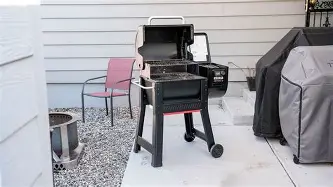
Upgrading to the Weber Smoque is an investment in consistency. It is the steady, reliable workstation that uses technology to eliminate human error. It is for the person who wants the results to be perfect every time without necessarily needing to understand the underlying code. The LiDAR and the dual-processor hub are silent partners in the background.
Upgrading to the Uplift Pursuit is an investment in versatility. It is for the person who wants their backyard to feel like a high-tech laboratory. The ability to use the induction coil for rapid searing means you can finally replace both a charcoal grill and a smoker with one single electronic unit. While it carries a steeper learning curve and demands more from your electrical infrastructure, the performance ceiling is undeniably higher.
Conclusion
In the "Spec Battle" between the Weber Smoque and the Uplift Pursuit, there is no hardware-level "loser." Instead, there are two distinct paths. Weber has successfully digitized the soul of barbecue, creating a robust, dependable machine that uses modern sensors to uphold traditional standards. Uplift has reimagined what a smoker can be, treating heat as a variable to be manipulated through a blend of magnetic and combustion forces. Whether you choose the armored reliability of the Smoque or the versatile intelligence of the Pursuit, the real winner is the consumer, who now has access to professional-grade thermal control in a consumer-friendly package. As these outdoor electronics continue to blur the line between the kitchen and the computer lab, the "worth" of the upgrade is found in the peace of mind that comes with knowing the silicon is watching the fire so you don't have to.